Depressed mood, loss of interest, sleep pattern change, loss of appetite, overall low energy, anxiety, trouble concentrating, feelings of guilt and thoughts about death
The 9 signs of Depression.
So my first article- a bit personal and a bit in your face. I’d say i’m sorry but that isn’t why I’m here, so I say welcome to article number two, where I dive into brain anatomy and how the brain of a teenager is actually different from adults (shocker, I know) and what medications are doing to damaged areas of the brain.
Again:
I DO NOT DISAGREE WITH MEDICATIONS: I cannot scream this loud enough. Nothing I say should be taken as medical advice, speak to your physician if you have questions and do not come off of regulating medication without speaking to your doctor.
*** I AM HERE to spread the awareness of prescription > treatments for trauma that happened as a result of COVID-19 and how the pharmaceuticals are making billions on this industry. ***
Thank you.
As I was saying,
There was actually a HUGE breakthrough via Mark Cuban (sorry, my attention span is little to none) announcing that he is fighting the insane costs on generic drugs by selling them at affordable prices. 🙂
Okay, so, the brain.
Such a beautiful, complex and marvelous collection of ventricles and spinal fluid, nerves and blood vessels and some little gyrus’ that move our feelings and senses and interpretational data around creating our personalities and day-to-day functions.
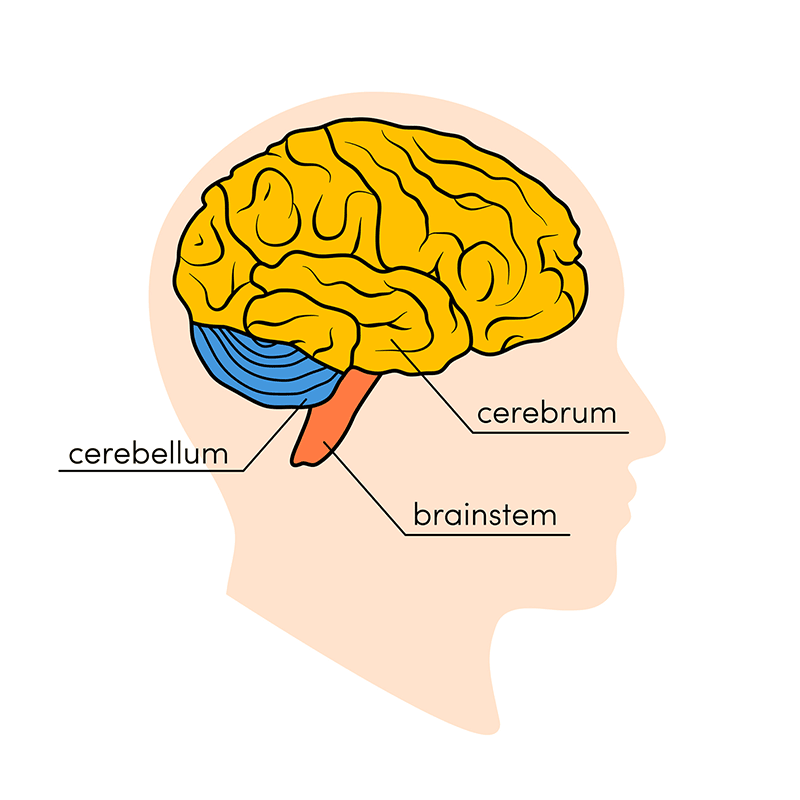
The three main parts of the brain:
- Cerebrum, the left and right hemispheres.
- Cerebellum; coordinating muscle movement, maintaining posture and balance.
- Brainstem; relaying information from the spinal cord, regulating the body temperature, wake/sleep cycles, heart rate, breathing, digestion, sneezing and coughing.
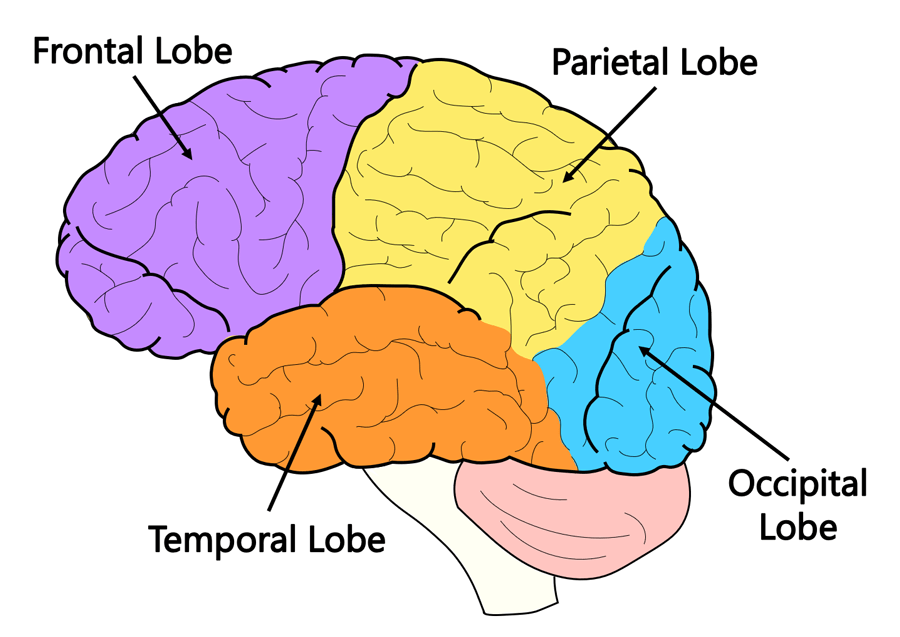
Then you have the 4 lobes of the brain:
- Frontal- Speech, personality and emotions, judging, problem solving and self awareness.
- Parietal- sense of touch and pain, perception in vision and language.
- Occipital- interpret colors, light and movement.
- Temporal- understanding language, memory, hearing and organization.
If something is damaged in the brain, you run into risk of developing things such as speech impediments, ticks, difficulty moving the tongue or interpreting things such as color… There’s a lot that could go wrong.
So teenagers, they have a bit harder skull than babies do at their age, however, the things inside the skull aren’t fully developed nor matured yet. Athletic concussions, according to the NCBI, affect 12% of players in high school. The cognitive development and the motor function are just some of the affected brain functions that can alter a teenagers life- and in situations such as these, I do agree with some form of “help,” but even a concussion is treated with recovery methods such as sleep and no strenuous activity to the brain for a few days. Non-pharmacological.
So if we aren’t using pharmaceuticals for the recovery of brain damage in sports, why are we using hormone regulators for issues that are caused at home? Or for puberty-related situations? With tests that document things such as ADHD, bipolar disorder and other forms of brain development speedbumps (yes, I call them speedbumps.), we can accurately tell where the need for a stimulator or a block is necessary given the genetics behind the diagnosis.
Non scientific terms: With technology, doctors are able to see where something is wrong and treat it.
I apologize, I get excited and just start typing.
Diagnosis and treatment like this is necessary in situations where genetic informality or injury occur. However, COVID-19 as an event, is not a genetic informality even though it caused a severe change in lifestyles.
For teenagers, as I spotlighted in the previous article, it caused higher levels in depression and anxiety, and lead to the increase in suicides. This is probably true in every age group that we have- from elderly in nursing homes with restricted visiting rights to single moms that lost their job and have 2 kids at home.
However, for the optimistic few, it was an event that allowed them to reset and recover and to slow down from a fast-moving life we live in today. It’s “adapt or be left behind” and with every generation we can see that type of change. Some invested their money and became millionaires and others were scrambling to make ends meet for their family. It was a life-changing summer for everyone and not everyone was able to recover from the trauma that resulted.
Now that the world has adjusted and developed resources, relocated jobs, created opportunities for the unemployed and progressed as a whole, what’s left is a bunch of anxious individuals who are not trying to relapse that wholeeeeeee situation again and their habits formed following close behind. Instilled in their minds is “we have to make sure that we do everything we can so that we don’t fall into the hole again” or the “what if’s” start to invade their minds. Some seek help and get Ritalin or some sort of medication to help with the “imbalance” and chaos and it might help. But what you’re missing is that everything catches up one day.
Enough sleep, the right nutrition, healthy habits, exercise.
I heard that throughout life, but honestly, taking a Ritalin and passing my class seemed so much more appetizing and it was easier. That’s how it’s marketed. Easier, and you know what? It’s also marketed that the most successful people live off of 5 hours of sleep, endless dedication and burning out in 6 months. But the reality is that the world’s most successful people recommend the opposite of those things: go to sleep at a reasonable time, dedicate but also take breaks, continue developing different skills and hobbies…
Since pre-school, children are paraded into certain ways of thinking dictated by individuals with a degree and some reign in politics. This goes into early medication: “You just need something to help control your racing mind!” “You’re just too smart for the other kids to understand.” “You are ____.” Fill in the blank- whatever it is, you are now influencing a child into believing whatever you believe for good or worse.
Fast forward a few years and you see puberty take place and hormones for teens are raging everywhere. We dictate that some kids are too smart or too talkative or too much and we put them on regulating prescriptions. The sad thing is that majority of these prescriptions contain addictive substances. How many times do you hear about someone selling adderall or ritalin in college and young adults take them to do what? Stay awake, stay aware and pass a class.
If there is anything you take away from this, let it be that you need to work through an event or through the trauma no matter how difficult. If even a concussion requires just rest, the concussion the COVID left you with requires the same thing. Close your eyes and adapt. The push for “stabilizers” and hormonal balance is growing but you don’t need to balance what isn’t wrong with you. The feelings are valid, due to a real event and that’s my two cents.
References:
- Mayfield Clinic (April, 2018). Anatomy of the Brain. https://mayfieldclinic.com/pe-anatbrain.htm
- NCBI (15 March, 2018). Incidence and Risk of Concussions in Youth Athletes: Comparisons of Age, Sex, Concussion History, Sport, and Football Position. https://www.ncbi.nlm.nih.gov/pmc/articles/PMC6345352/#:~:text=Results,higher%20concussion%20risk%20than%20boys.
- NCBI (Oct 1, 2013). Treatment of Post-Traumatic Cognitive Impairments. https://www.ncbi.nlm.nih.gov/pmc/articles/PMC3437653/
- The Orthopedic Institute of New Jersey (Dec, 2021). https://orthopedicnj.com/news/concussions-in-young-athletes
 okay, perfect.
Leave a comment